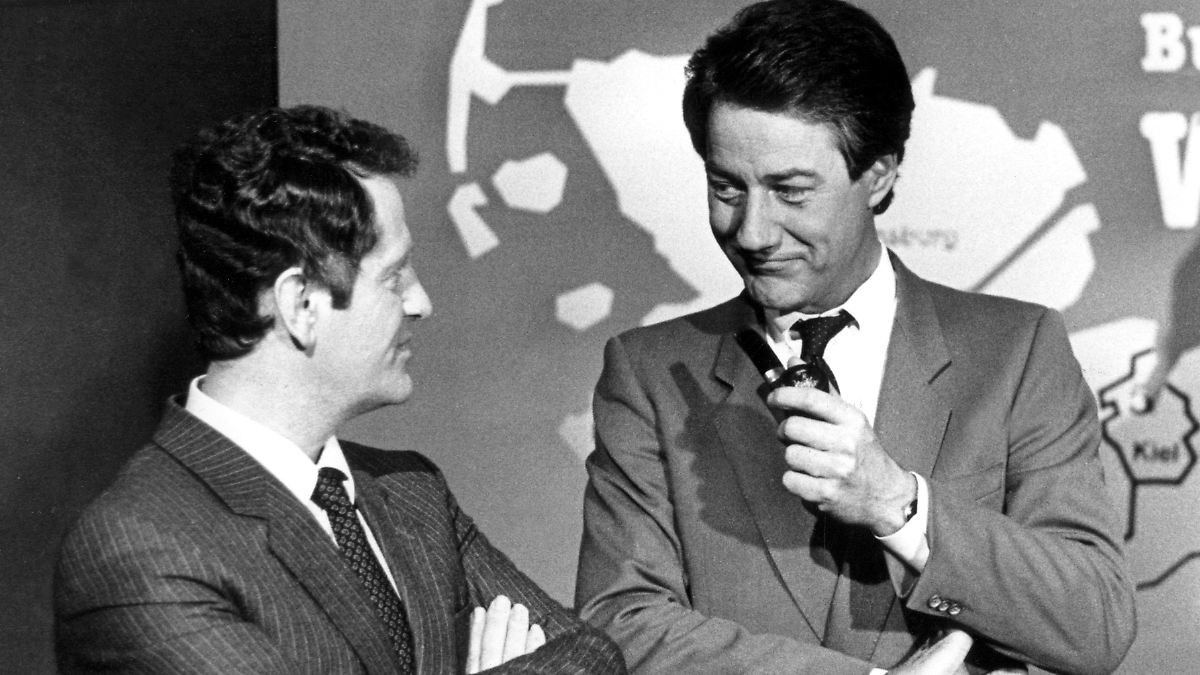
Uwe Barschel: Dirty Tricks, Political Downfall, and Unanswered Questions
The autumn of 1987 saw Germany gripped by a political scandal that would irrevocably alter the landscape of public trust and forever cast a shadow over a promising career. The
Uwe Barschel Affäre, as it came to be known, began with accusations of elaborate "dirty tricks" and culminated in the mysterious death of Schleswig-Holstein's Minister-President, Uwe Barschel. A rising star of the Christian Democratic Union (CDU), Barschel���s meteoric ascent was matched only by his sudden and dramatic fall, leaving behind a legacy of unanswered questions and lingering suspicion that continues to fascinate and disturb. This saga remains one of the most enigmatic and impactful political dramas in modern German history.
The Genesis of the Scandal: Allegations of "Dirty Tricks"
The first crack in Uwe Barschel's carefully constructed public image appeared on Saturday, September 12, 1987. Just after 3 PM, the radio program NDR II broadcast a bombshell: the influential news magazine "Der Spiegel" was set to publish a damning report on Monday, detailing highly questionable tactics employed by the Minister-President of Schleswig-Holstein. The core accusation was shocking: Barschel himself had allegedly orchestrated the surveillance of his political rival, Björn Engholm, the Social Democratic Party (SPD) challenger and leader of the opposition in the Kiel state parliament. Furthermore, it was claimed that Barschel had dictated an anonymous complaint accusing Engholm of tax evasion.
The source of these explosive revelations was a 22-page sworn affidavit from Reiner Pfeiffer, a 48-year-old media observer in the Kiel State Chancellery, who had "spilled the beans" to "Der Spiegel." Pfeiffer had submitted his sworn statement to a Hamburg notary on September 9th and had subsequently vanished, reporting himself sick from work. Calls to his home near Kiel and to his wife in Bremen went unanswered, adding to the intrigue.
As more details from "Der Spiegel's" impending exposé became public throughout that fateful Saturday afternoon and evening, Barschel's composure reportedly began to crack. While he later claimed his nervousness stemmed not from fear of "revelations" but from other concerns related to an upcoming event, the weight of the allegations was clearly immense. This was no ordinary political skirmish; it was an unprecedented attack on the integrity of a state leader, threatening to dismantle a career that many believed was destined for the highest echelons of German politics. The "Uwe Barschel Affäre" had truly begun.
The "Ehrenwort" and Political Downfall
Barschel moved quickly to contain the damage. He convened a press conference, vehemently dismissing the accusations as "foul and untrue." However, his denial failed to resonate with the public. The very next day, Sunday, September 13, 1987, the state election delivered a harsh verdict: his CDU party suffered a significant loss, dropping six percentage points. The political landscape was shifting rapidly beneath his feet.
Under immense pressure, Barschel called another press conference on September 18th, where he delivered what would become one of the most infamous statements in German political history. "Beyond these sworn affidavits that I am about to present to you," he declared, "I give you, I give the citizens of the state of Schleswig-Holstein and the entire German public my word of honor – I repeat: I give you my word of honor! – that the accusations made against me are baseless." This bold pronouncement, his "Ehrenwort" (word of honor), was intended to silence his critics and restore his credibility.
Instead, it became his ultimate undoing. Subsequent investigations revealed that at least some of the allegations against him were indeed true. The sworn affidavits Barschel presented to counter the claims were also found to be less than robust. His career, which had once seemed on a clear path to potentially even the Chancellor's office, was effectively over. Barschel, born in 1944 and a self-made politician who overcame a challenging upbringing, had been a figure of immense ambition and strategic acumen. His early life, including a controversial invitation of Hitler's successor Karl Dönitz to his high school, hinted at a complex personality. Yet, his political journey ended abruptly on September 12, 1987, not with a bang, but with a betrayed "Ehrenwort." This particular facet of the scandal is explored further in
Uwe Barschel: The 'Ehrenwort' Scandal That Shook 80s Germany.
The Enigma of Room 317
Just four weeks after the "Ehrenwort" debacle, the scandal took an even more shocking and tragic turn. On October 11, 1987, at 12:43 PM, "Stern" reporter Sebastian Knauer entered Room 317 of the Hotel Beau-Rivage in Geneva. The room was unlocked, despite a "Do Not Disturb" sign on the doorknob. Inside, the room was darkened. Knauer noticed a neatly tied black men's shoe in the hallway, a folded pajama on the bed, and a German edition of Jean-Paul Sartre's collected short stories.
With a small camera in hand, Knauer opened the bathroom door. There, in a water-filled bathtub, he found Uwe Barschel, fully clothed, dead. The immediate consensus among investigators and media was suicide. However, as the years passed, this conclusion began to unravel under the weight of mounting evidence and suspicious circumstances, giving rise to numerous theories pointing towards murder. The scene itself, meticulously documented by Knauer, became central to the ongoing debate. The precise arrangement of items, the presence of specific medications, and the lack of a clear suicide note fueled the fire of speculation. The mystery surrounding Barschel's death in Room 317 became as central to the Uwe Barschel Affäre as the initial political scandal itself.
Unanswered Questions and Lingering Speculation
The official verdict of suicide, delivered relatively swiftly after Barschel’s body was found, has been contested almost ever since. Today, many compelling pieces of circumstantial evidence and expert opinions lean towards the theory of murder. This stark divergence of opinion highlights the deep, unresolved nature of the
Room 317: Unraveling the Mystery of Uwe Barschel's Death.
Schleswig-Holstein's Attorney General, Erhard Rex, however, remained skeptical of the murder theory, criticizing what he perceived as a "marketing" of the alternative hypothesis. His stance reflects the official reluctance to reopen a case that has been officially closed, despite persistent public and journalistic pressure. The reasons for this reluctance are complex, but they contribute to the enduring cloud of suspicion that hovers over the Uwe Barschel Affäre.
The list of potential motives and culprits in the murder theories is long and varied. Some speculate about the involvement of intelligence agencies, perhaps linked to Cold War-era activities or arms dealings that Barschel might have stumbled upon. Others point to political enemies or individuals who felt betrayed by his actions or knowledge. The nature of the "dirty tricks" itself – involving surveillance and potentially illicit information gathering – could have opened a Pandora's Box that Barschel was unable to control. The fact that Pfeiffer vanished and later reappeared with conflicting accounts only added more layers to the enigma.
The lack of definitive closure has allowed speculation to fester, turning the Uwe Barschel Affäre into a cautionary tale about the perils of political ambition, the corrosive effect of deception, and the chilling possibility of high-stakes foul play. It serves as a stark reminder of the importance of transparency and accountability in public office, and the devastating impact when these principles are compromised.
Conclusion
The Uwe Barschel Affäre remains a significant, if dark, chapter in German political history. It exposed the underbelly of political competition, demonstrating how far some might go to gain an advantage, and how quickly a promising career can unravel. The tragedy of Uwe Barschel’s death, coupled with the ongoing debate between suicide and murder, ensures that the story continues to captivate and challenge. It reminds us that behind the headlines and political machinations, there are human stories, often ending in profound mystery and unanswered questions. The lasting legacy of the Barschel Affäre is not just a scandal, but a haunting narrative about integrity, power, and the secrets that some cases refuse to yield, urging us to consider the true cost of political "dirty tricks."